Health Tips
Future alternatives to the vaccine needle
Future alternatives to the vaccine needle
Most vaccines still go into the upper arm with a needle. That works. It is also fiddly: syringes, sometimes mixing powder first, a cold chain, and people who would rather skip the jab.
The World Health Organization (WHO) says delivery is one reason immunisation coverage has plateaued. In 2020, 23 million children missed their shots, 3.7 million more than in 2019.
That is why WHO, Gavi, UNICEF, PATH and the Bill & Melinda Gates Foundation are looking at other ways to vaccinate. Their Vaccine Innovation Prioritisation Strategy (VIPS) picked three priorities in May 2020: microarray patches, heat-stable vaccines, and barcodes on primary packaging.
Not everything is future tense. Some alternatives to the needle already exist. Others are in trials. This is information, not medical advice. In the Dutch national programme, the standard remains a needle.
What already works without a needle?
For years:
- oral polio vaccines
- rotavirus drops for infants, including in the Netherlands
- oral cholera vaccine
- in some countries, a nasal flu vaccine
Nasal vaccines target the mucosa, where respiratory viruses enter. Researchers are working on nasal vaccines for other respiratory infections. Most COVID-19 vaccines in Europe remain an arm injection.
PharmaJet Tropis is different: not a patch, but a thin stream of liquid into the skin, without a needle. WHO has prequalified the device for intradermal delivery. It has been used in polio campaigns, including in Pakistan and Nigeria. That is the closest thing to “already needle-free in the field”. It does not replace DTP or MMR in the Netherlands.
Skin patches: Micron, Vaxxas and others
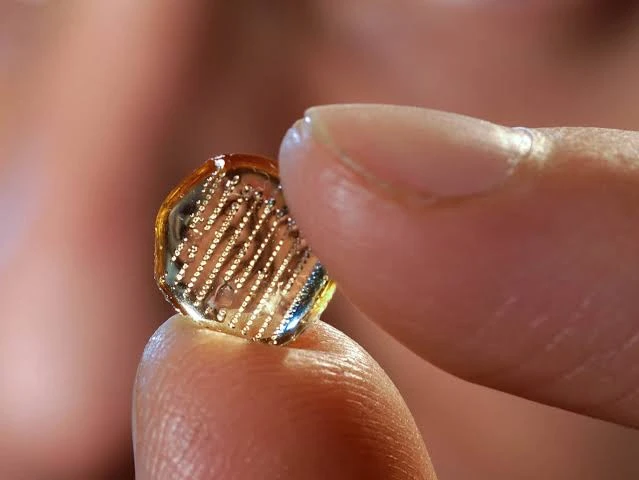
A microarray patch, or MAP, is a small skin patch with very short tips. They are too short for a normal injection. They put the vaccine in the upper skin, where many immune cells sit.
WHO lists benefits such as: no reconstitution and no syringe, less pain, potentially better stability outside the fridge, and delivery by less specialised staff.
For measles and rubella, WHO names two clinical candidates:
Micron Biomedical makes a dissolvable patch. It stays on the wrist for a few minutes. Their phase 1/2 study in adults, toddlers and infants in The Gambia was published in The Lancet. Safety and immune response looked similar to a standard subcutaneous shot. In infants, this is the furthest-along MAP.
Vaxxas makes a High-Density Microarray Patch: thousands of tips about 0.25 millimetres, with dried vaccine, and a single-use applicator on the upper arm or thigh. Their adult measles-rubella trial is complete. A paediatric phase was planned next.
Phase 3, licensing and WHO prequalification are still ahead. Do not expect one at your next DTP or MMR visit.
Other companies put mRNA on a patch. That is earlier stage. The US BARDA Patch Forward Prize named, besides Vaxxas and Micron, LTS Lohmann (Germany) with BioNet, and PopVax (India) with LTS. The aim: a flu or COVID RNA vaccine on a microneedle patch. Not a routine product.
Heat-stable vaccines
The second VIPS priority is vaccines that can sit outside the fridge for a limited time, in a controlled temperature chain. Less ice, less wastage, more reach. That can go with a patch or a classic syringe.
mRNA is a different leap: faster manufacturing when a new variant appears. Those vaccines still use a needle, and often need extra-cold storage.
What does this mean for your record?
Whether you get a jab, drops, a jet or later a patch: the date, the disease and the product name still matter. For travel, a booster or a new outbreak, a clinician needs to know what you already had.
Vaxy keeps that in one place, for you and your family.
Unsure about a vaccine? Ask your GP, the municipal health service (GGD) or a travel clinic.
Short answers
Which alternatives to the needle already exist? Drops (polio, rotavirus, cholera), in some countries a nasal flu vaccine, and PharmaJet needle-free jet injection in some polio campaigns.
What is a microarray patch? A small skin patch with short tips. Micron and Vaxxas are the two candidates WHO names for measles and rubella.
Can I go needle-free in the Netherlands? Rotavirus already as drops. Otherwise RIVM still uses needle and syringe in the national programme. Skin patches are research.
Why does WHO want this? Simpler delivery can reach more people, especially children who currently get zero doses.
Sources
- WHO: innovative vaccine delivery, including microarray patches
- WHO: Technical Advisory Group on measles-rubella microarray patches
- WHO: Target Product Profile for measles-rubella MAP
- The Lancet: Micron measles-rubella patch, phase 1/2 in The Gambia
- WHO PQS: PharmaJet Tropis needle-free injector
- BARDA: Patch Forward Prize, concept-stage winners
- Gavi: Vaccine Innovation Prioritisation Strategy (VIPS)
- RIVM: Dutch national immunisation programme